Pitched roofing · Shingles · Metal · Euroshield
Pitched roofing in Victoria, BC.
Most houses here wear a pitched roof, and the choice comes down to three systems: asphalt shingles, standing seam metal, and Euroshield recycled rubber. This page puts them side by side — what each one costs, how long it really lasts, what the warranty actually promises, and how each one handles salt air and fire — so you can pick with your eyes open.
Get an Online Quote Call 250-889-5620
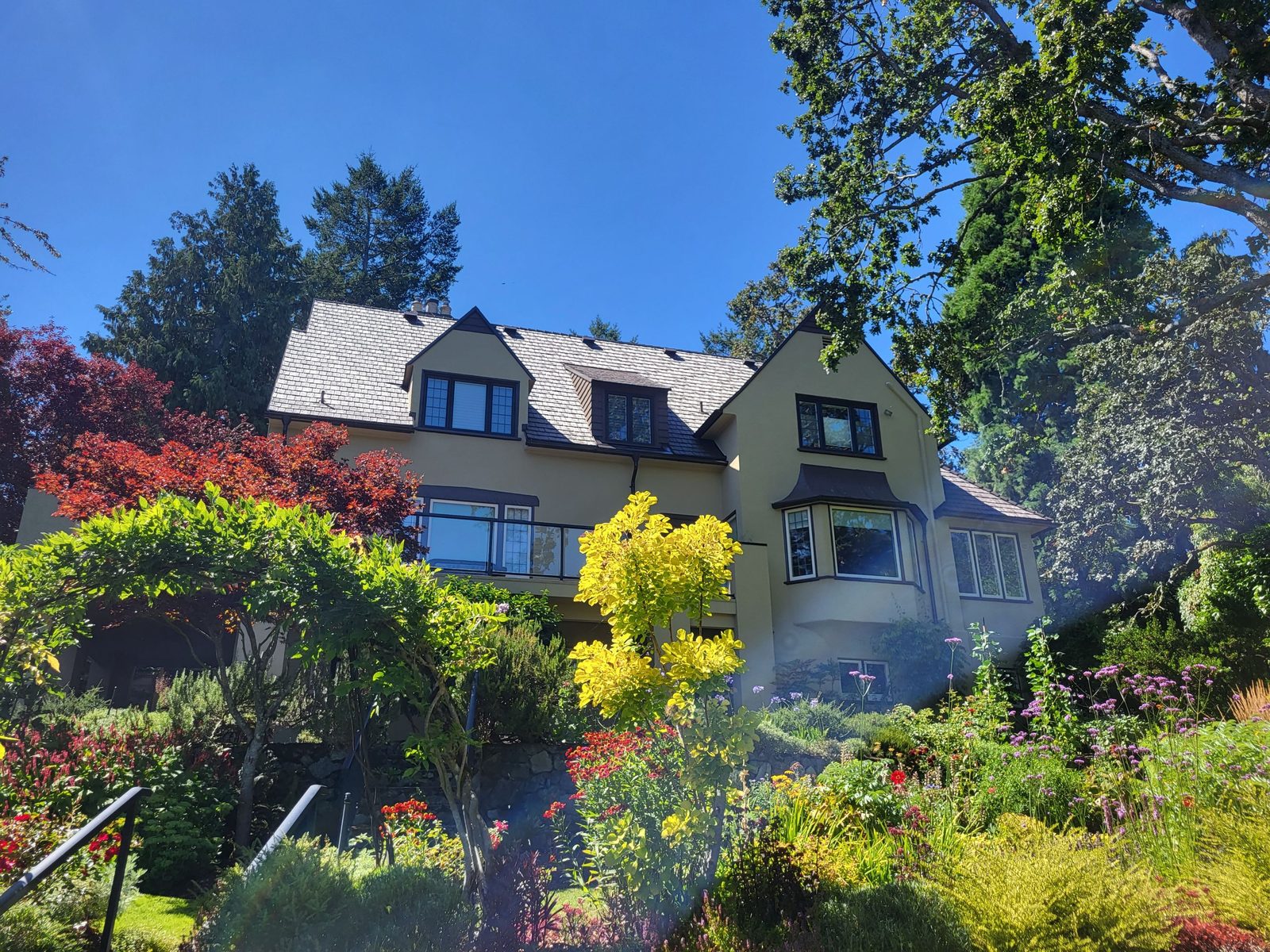
The three systems, side by side
Every pitched-roof conversation I have lands on the same four questions: how long does it last, what does it cost, what does the warranty really cover, and how does it do in a fire. Here is the short version — the honest detail is in the sections below.
| System | Realistic life here | Installed cost (2026) | Fire class |
|---|---|---|---|
| Architectural asphalt shingles | 20–30 years | $4.50–$7.50 / sq ft — lowest upfront | Class A in standard assemblies |
| Standing seam metal | 40–60+ years | $10–$16 / sq ft — premium | Noncombustible; Class A assemblies |
| Euroshield recycled rubber | Rated 50+ years by the maker | Premium — metal-roof money | Class C — the maker’s own rating |
| Cedar shakes & shingles | 20–30 years, ventilated + maintained | Premium, plus upkeep | Untreated: none · fire-treated: B or C |
Costs are the installed ranges used across this site for Victoria. The life expectancies are what I see on real roofs here, not brochure numbers — and the warranty question gets its own section below, because a warranty is not a lifespan.
Asphalt shingles — the default, done properly
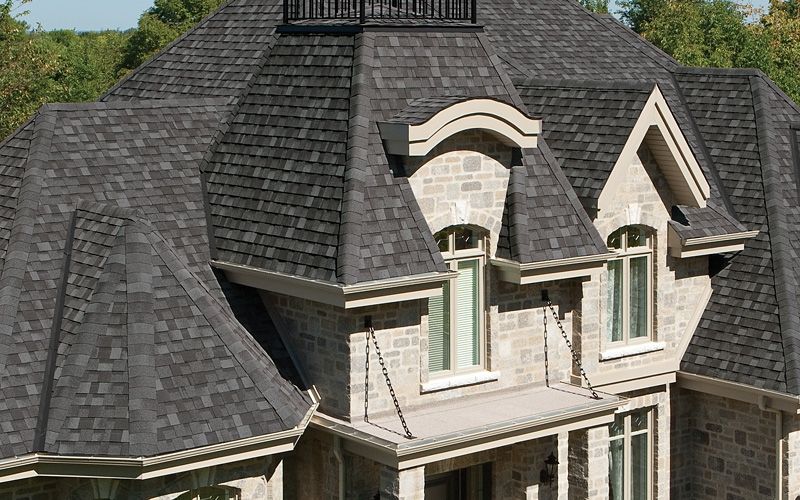
Architectural (laminate) shingles are the default pitched roof in Victoria for a reason: lowest installed cost, every colour you could want, and 20 to 30 honest years when the roof under them is built right. What decides whether you get 20 or 30 is mostly invisible from the street — deck condition, underlayment, ventilation, and flashing work. Two local notes: pick shingles with algae-resistant granules, because the black streaks on north slopes here are algae, not dirt; and take the “lifetime” warranty language with salt — it is a limited, prorated material warranty, not a promise the roof outlives you. The full shingle page covers profiles, wind ratings and composites: shingles & composites.
Standing seam metal — and what the seams actually mean
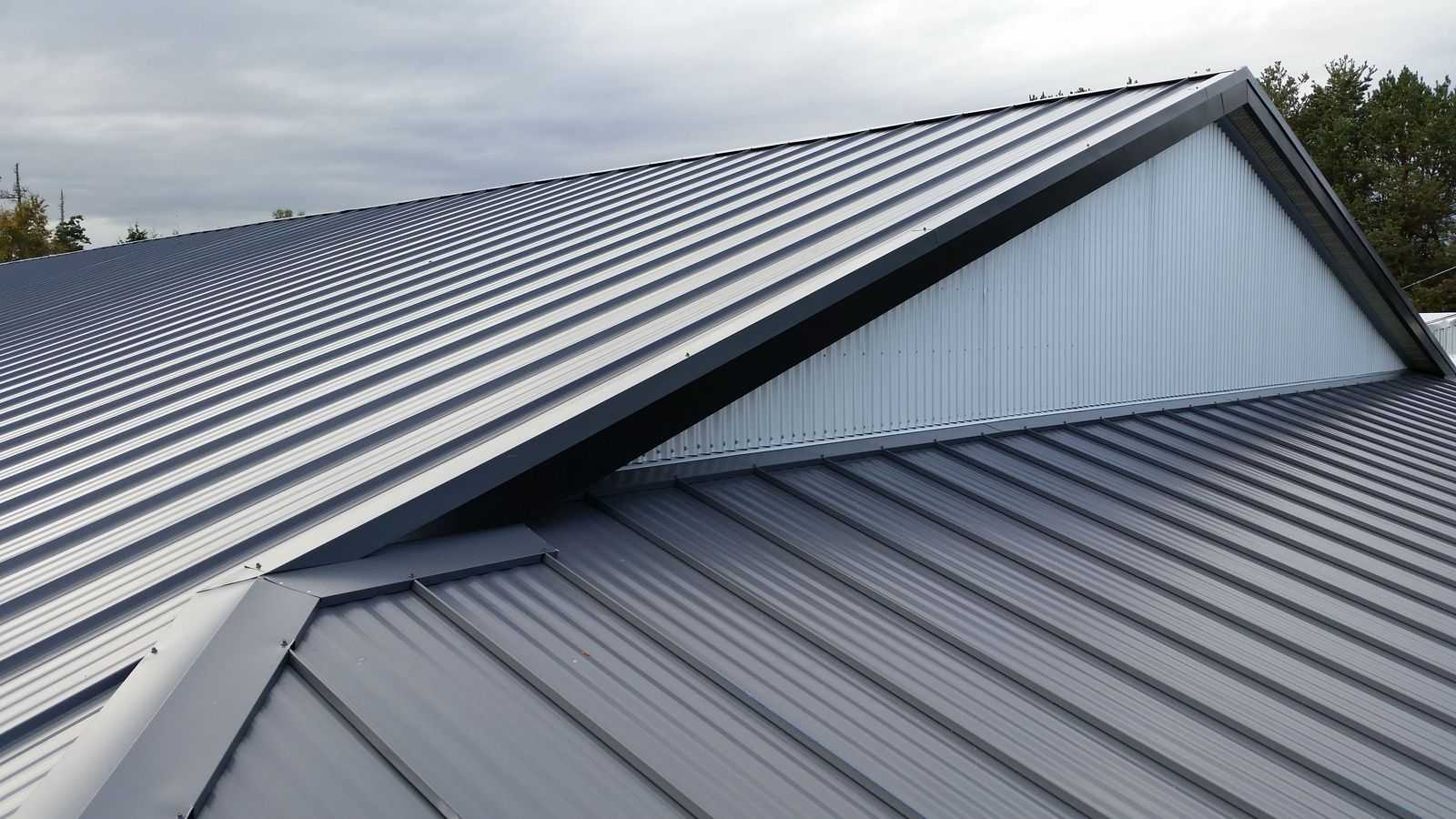
Standing seam is long metal panels joined by raised seams that stand about 1.5 inches tall — the 1.5-inch profile is the one I spec — with the fasteners hidden on clips under the seam. No exposed screws to back out and leak, and the panels can move with temperature. It is the longest-lived pitched roof I install: 40 years is a fair expectation, 50-plus is common. But “standing seam” covers three different seams, and which one you get matters:
| Seam | How it closes | Slope it needs | Where it belongs |
|---|---|---|---|
| Snap lock | The panel legs snap together over concealed clips — pressed together, no seaming machine | 3:12 or steeper — the seam is not sealed | Steep, sheltered roofs. The economical standing seam. |
| Single lock (mechanical) | A seaming machine folds the seam once — a 90° fold | Around 2:12 and up; lower with sealant in the seam | Most houses. A real step up in wind and water resistance. |
| Double lock (mechanical) | Folded twice — a 180° fold that wraps the clip completely | Down to about 1:12 with in-seam sealant | Low slopes, exposed coastal sites, commercial work. The strongest, most watertight seam — and the most labour. |
My take: on an exposed coastal roof, a mechanically seamed double lock earns its money — mechanical seams test far higher for wind uplift, and the seam is genuinely closed against driven rain. On a steep, sheltered roof, snap lock is a reasonable saving, as long as everyone is honest that it is a different product. Panel material and coastal choices are in the ocean section below; the dedicated page is metal roofing.
Euroshield — the roof made of old tires
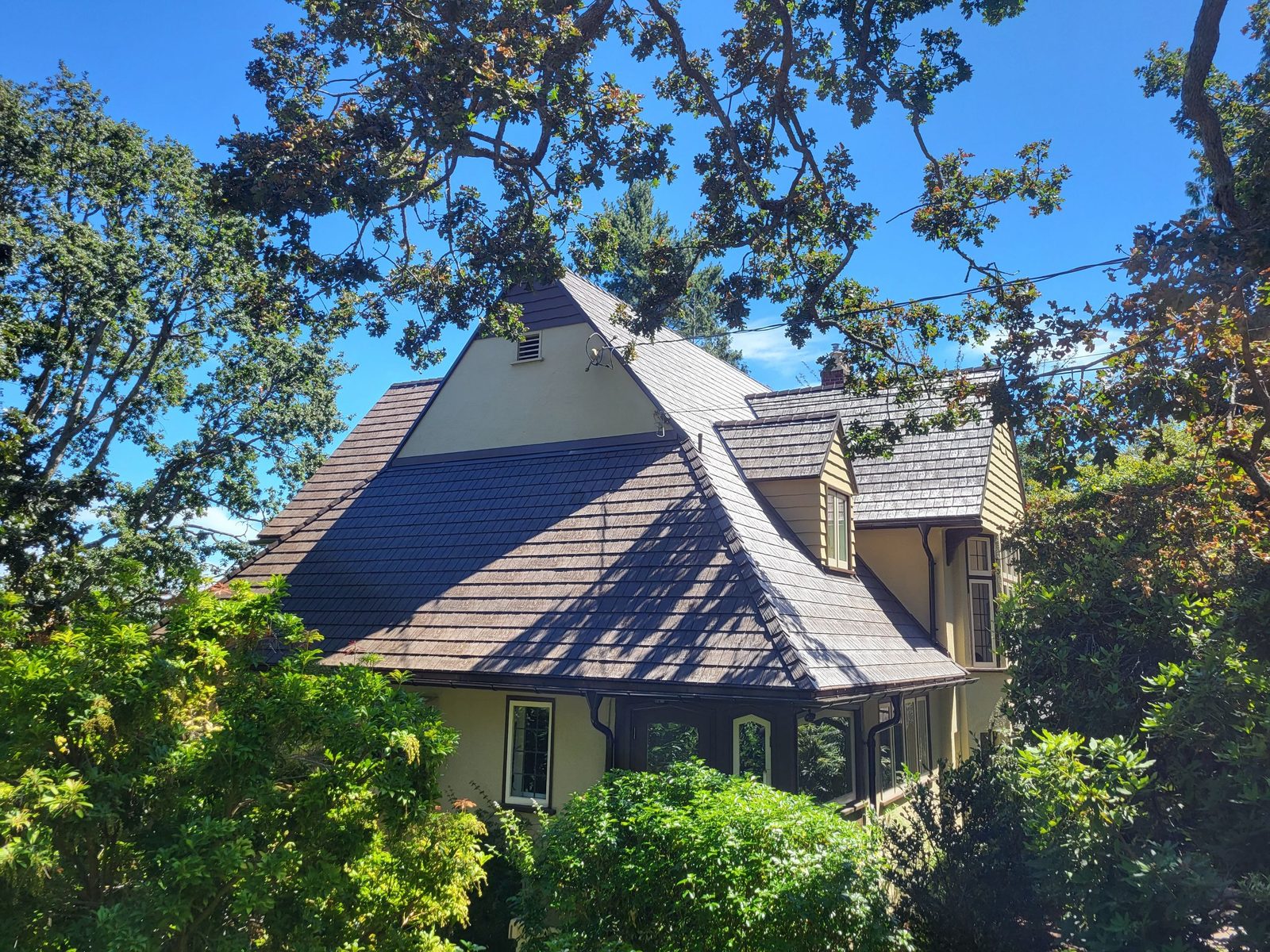
Euroshield is made in Calgary from recycled tires — roughly 70% tire rubber, about 95% recycled content overall — moulded into profiles that copy cedar shake and slate. By the maker’s count, an average roof keeps somewhere between 250 and 1,000 tires out of the pile. Euroshield’s own marketing leans into the joke, and their feed is genuinely funny — but the product under the jokes is dead serious.
Where it shines: it carries a Class 4 impact rating — the highest there is — so hail and storm debris that would crack slate or dent metal bounce off. It does not rot, split, or grow anything: there is nothing in rubber for moss to eat. It is quiet in rain, walkable without damage, and the colour tends to deepen over time instead of fading, because the carbon black in tire rubber is one of the most UV-stable materials there is. The warranty is unusually straight for this industry: 50 years non-prorated on a house, then capped at 25% of the original material price.
The honest limits, because there are two: it costs premium money — metal-roof money — and every Euroshield profile carries a Class C fire rating, which Euroshield states plainly themselves. It also does not belong on slopes of 3:12 or less. If your insurer or your strata requires Class A, this is not your product — and anyone selling it to you should say so before you sign, not after. More Euroshield roofs I have worked on are on the projects page.
Cedar — the Island classic
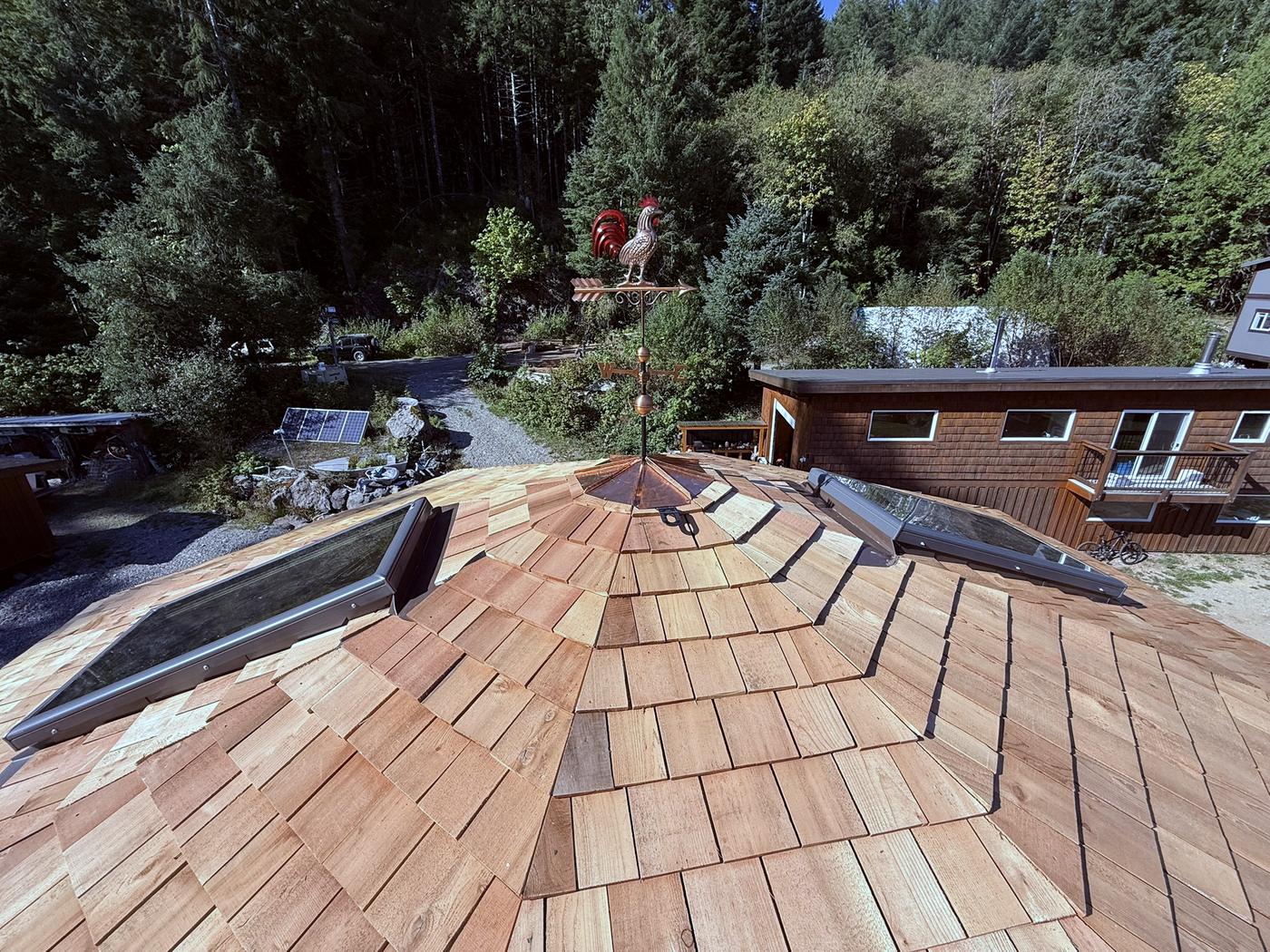
Cedar is the roof this Island grew up with, and done right — ventilated underneath, proper fasteners, maintained — it gives 20 to 30 years here. Done wrong, unventilated, it can fail in half that. It is also the one system on this page with a real fire problem in its natural state: untreated cedar has no fire rating at all (next section). The cedar page covers install, restoration and converting a cedar roof to something else: cedar roofing & conversion.
Living beside the ocean
Victoria roofs do not die of old age; they die of salt, shade and driven rain. Per system:
Metal: salt air is the real enemy, and the panel choice decides it. Aluminium does not rust — it forms its own protective oxide skin — so aluminium is my default close to open water. Galvalume and galvanized panels are steel underneath the coating: every cut edge and scratch is a rust start, and the paint warranties cover chalk and fade, not corrosion of the metal under the paint. Manufacturers also exclude breaking-surf exposure — for a waterfront address, get the maker’s answer in writing before you order. And the panels are rarely what fails first: fasteners, clips, trim and flashings corrode years earlier, which is why the details get stainless or matching-metal hardware. Keep copper runoff off steel, too — dissimilar metals plus salt water is galvanic corrosion, and it is excluded from warranties for a reason.
Shingles: the coast attacks shingles with wind-driven rain and biology. Driven rain gets under courses, so sealed shingles, correct nailing and ice-and-water membrane at eaves and valleys matter more than the brand on the bundle. In shade, algae streaks and moss follow; moss lifts shingles and breaks seals, and aggressive cleaning does the same — algae-resistant granules and a ventilation fix beat a pressure washer every time.
Euroshield: rubber does not corrode, absorb water or feed moss — on paper it is the coastal natural. The weak points are the same ones every roof has: the metal flashings and fasteners around it. Spec those for salt air and the system holds up.
Cedar: constant wet plus shade is moss country. Ventilation is the whole game — a cedar roof that can dry lasts; one that can’t, rots.
Fire ratings, explained properly
Roof fire ratings come from one test — ASTM E108, which is the same test as UL 790 (the Canadian version is CAN/ULC-S107). A roof sample is attacked with fire from outside: flame spreading across the surface, intermittent flame, and burning wooden brands dropped on it. It simulates the fire next door and wildfire embers landing on your roof — not a fire inside the house.
| Class | Exposure | What the test allows |
|---|---|---|
| Class A | Severe | Flame spread up to 6 ft; the largest burning brand (about 12 × 12 in); 15 intermittent-flame cycles |
| Class B | Moderate | Flame spread up to 8 ft; two mid-size brands; 8 flame cycles |
| Class C | Light | Flame spread up to 13 ft; twenty small brands; 3 flame cycles |
Two things most sales pitches skip. First: the rating belongs to the whole assembly — the covering, the underlayment and the deck, tested together, exactly as installed. Change one layer and the rating may not hold. Second: Class A is not “fireproof,” and it is not an hourly rating like a firewall — that is a different test (UL 263 / ASTM E119) for walls and floors, not roofs.
Where the systems on this page land: modern fibreglass asphalt shingles are Class A in standard assemblies. Metal does not burn, and Class A metal assemblies are standard — over a wood deck it still has to be the tested assembly. Euroshield is Class C on every profile, by the manufacturer’s own statement: fine for most houses, wrong where Class A is required. Untreated cedar has no classification at all — FireSmart BC calls untreated shakes a dangerous combination of combustible material and crevices that trap embers. Pressure-treated fire-retardant cedar (sold as Certi-Guard) reaches Class B with the red label or Class C with the blue label, and Class A cedar exists only as a tested component system with specified underlayments. Spray-on fire retardants do not count — they weather off in a few years and no certified assembly is built on them.
What raises a rating: choosing a Class A-tested assembly and installing it exactly as tested; fire-resistant underlayments — the fibreglass- and gypsum-based sheets made for exactly this job can carry an assembly to Class A; enclosed eaves and soffits; fine-mesh vent screens (FireSmart BC specifies mesh no larger than 3 mm) so embers cannot get into the attic; metal flashings; and clean valleys and gutters, because embers land in debris. If you back onto woods or grassland, FireSmart BC’s guidance is simple: a Class A roof. Their ember guidance is worth ten minutes: FireSmart BC — ember-resistant vents.
A warranty is not a lifespan
This is the section I wish every roofing website had. Manufacturer warranties cover defects in the material. They prorate — the cheque shrinks every year — and they exclude the things that actually kill roofs: installation errors, bad attic ventilation, storm damage. A shingle sold with a “lifetime” warranty has a limited, prorated warranty; the roof still lives 20 to 30 years. Metal paint warranties warrant the paint film — chalk, fade, peeling — not the metal corroding underneath it. Euroshield’s is the straightest of the lot: 50 years non-prorated, then capped at 25% of the material price, and they publish the limits where you can read them.
The warranty that decides whether your leak gets fixed for free is the installer’s workmanship warranty — who stands behind the work, for how long, in writing. Ask for it before you sign, on any system. My own warranty position is on the warranty page, and the full cost picture is on the roof cost page.
Go read the makers
Do not take a roofer’s word for any of this — including mine. The manufacturers publish their specs, warranties and fire ratings:
- Euroshield — recycled rubber roofing, made in Calgary. Their own page on durability states the Class C rating plainly.
- IKO — asphalt shingles (Cambridge, Dynasty), including their algae-resistance and impact ratings.
- ASC Building Products — Skyline standing seam metal panels.
- Enviroshake — composite shake and slate; Class A and C assemblies, 50-year transferable warranty.
- DaVinci Roofscapes — composite slate and shake, Class A rated.
Frequently asked questions
Which pitched roof lasts the longest?
Standing seam metal: 40 years is a fair expectation, and 50-plus is common. Euroshield rates its roofs at 50-plus years and warranties them for 50 years non-prorated. Architectural asphalt shingles give you 20 to 30 years in Victoria’s climate. Cedar, ventilated and maintained, also runs 20 to 30 years here.
Snap lock or mechanical seam — which standing seam do I want?
It depends on slope and exposure. Snap lock snaps together over concealed clips — fast and economical, but the seam is not sealed, so it belongs on steeper roofs, 3:12 and up. A mechanical seam is folded closed by a seaming machine: single lock folds it once (90 degrees), double lock folds it twice (180 degrees) and wraps the clip completely. Double lock, with sealant in the seam, is the watertight one for low slopes and exposed coastal sites. On a steep, sheltered roof, snap lock is a reasonable saving; by the ocean, I spec mechanical.
Is Euroshield worth the money?
If you want the last roof you buy, it is a serious candidate: Class 4 impact rating (the highest), nothing for moss to eat, no rot or splitting, and a 50-year non-prorated warranty. The honest limits: it costs premium money — metal-roof money — and every Euroshield profile carries a Class C fire rating, by the manufacturer’s own statement. If your insurer or strata requires Class A, Euroshield is not your product.
What fire rating should my roof have?
The rating belongs to the whole roof assembly — covering, underlayment and deck, tested together under ASTM E108 / UL 790 — not to the shingle alone. Class A is the highest. Most homes here are fine with a rated assembly, but if you back onto woods, or your insurer or strata asks, go Class A: asphalt shingles and metal reach it in standard assemblies, fire-treated cedar reaches Class B or C, Euroshield is Class C, and untreated cedar has no rating at all.
What is the best roof right beside the ocean?
Aluminium standing seam or Euroshield. Aluminium does not rust — it forms its own protective oxide layer — while Galvalume and galvanized panels are steel at every cut edge and scratch. Euroshield’s rubber does not corrode at all. Either way, the flashings and fasteners are what salt air eats first, so the details matter more than the field of the roof.
How much does a pitched roof cost in Victoria?
2026 guidance: architectural asphalt shingles run $4.50 to $7.50 per sq ft installed, standing seam metal $10 to $16. Euroshield and cedar sit in the premium tier. A typical Victoria home roof runs $13,800 to $21,500 depending on system, size and complexity — and I will tell you when the cheaper system is the right call.
Request a pitched roof quote
Tell me which way you are leaning — or that you have no idea yet. Both are fine starting points.